Crypto Price Volatility: Why It Moves So Much
Why do Bitcoin and crypto prices swing so dramatically? Learn the key factors driving volatility and how to navigate the market.
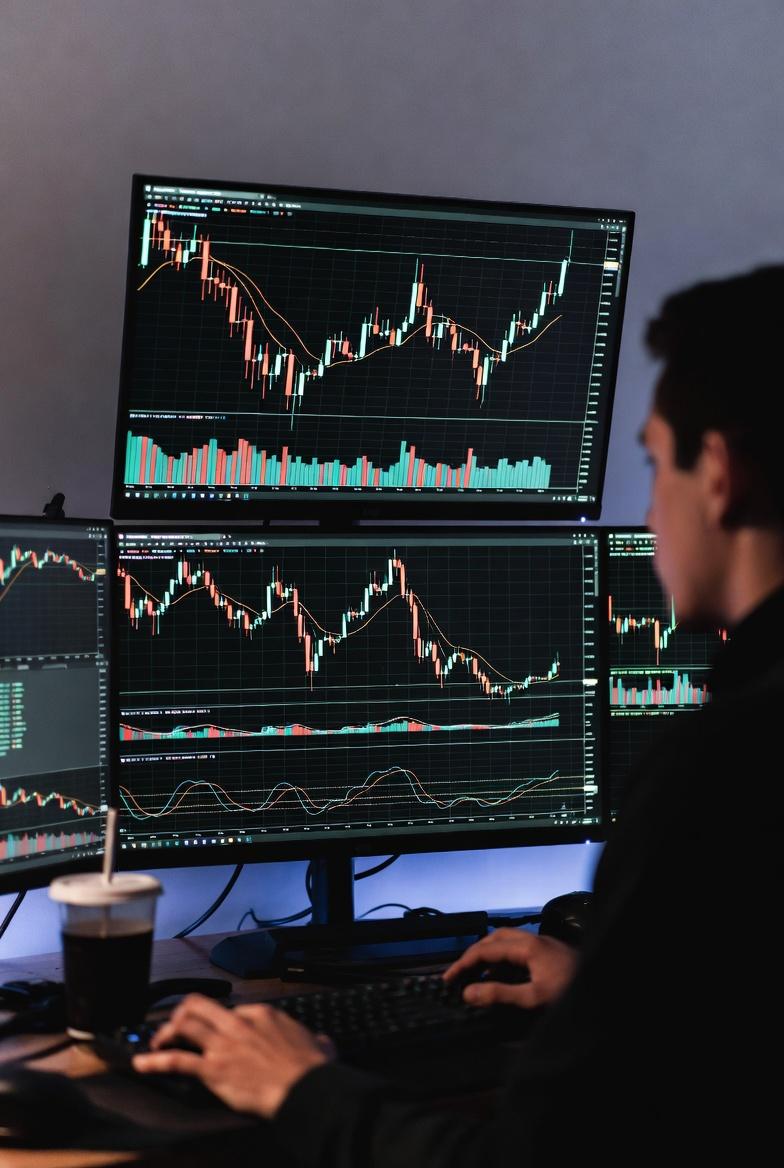
Why Is Crypto So Volatile?
Cryptocurrency markets are known for dramatic price swings that can make traditional investors uneasy. Bitcoin has seen multiple 80%+ corrections, yet also delivered returns exceeding 100% in single years. Understanding why crypto moves so much helps investors make better decisions.
Key Factors Driving Crypto Volatility
1. Market Size and Liquidity
Despite Bitcoin's $1+ trillion market cap, the crypto market is still small compared to traditional assets:
- Global stock market: ~$100 trillion
- Gold market: ~$12 trillion
- Entire crypto market: ~$2 trillion
- News impacts prices immediately, any time
- No circuit breakers to pause trading during crashes
- Weekend volatility when traditional markets are closed
- Gap-free price discovery
- Short-term traders seeking quick profits
- New investors learning the market
- Leveraged traders amplifying moves
- Regulatory announcements
- Exchange hacks or failures
- Celebrity endorsements or criticism
- Technology upgrades or problems
- Macroeconomic events
- A whale selling 10,000 BTC can crash prices
- Coordinated buying can trigger FOMO rallies
- On-chain data shows whale movements in real-time
- Stocks: Earnings, dividends, book value
- Bonds: Interest payments, face value
- Real estate: Rental income, replacement cost
- Bitcoin: 50-80% annual volatility
- Altcoins: 80-150%+ annual volatility
- S&P 500: 15-20% annual volatility
- Gold: 15-20% annual volatility
- Market cap grows larger
- Institutional adoption increases
- Regulatory clarity improves
- Infrastructure matures
- Use cases expand beyond speculation
- Opportunities for significant returns
- Trading opportunities in both directions
- Market inefficiencies to exploit
- Lower correlation with traditional assets (diversification)
- Set appropriate position sizes
- Choose suitable investment strategies
- Maintain emotional control during swings
- Take advantage of market opportunities
Smaller markets move more easily. A $1 billion trade barely registers in stocks but can significantly move crypto prices.
2. 24/7 Trading
Unlike stock markets that close overnight and on weekends, crypto trades continuously. This means:
3. Speculative Nature
Many crypto participants are:
This speculative activity amplifies both upswings and downswings.
4. News and Sentiment
Crypto prices react dramatically to:
A single tweet can move billions in market value within minutes.
5. Whale Activity
Large holders ("whales") can significantly impact prices:
6. No Intrinsic Value Anchor
Traditional assets have valuation anchors:
Crypto's value is based purely on network effects, utility, and belief in future adoption, making fair value subjective.
Measuring Crypto Volatility
Bitcoin's Historical Volatility
| Year | Annual Return | Max Drawdown | Volatility |
| 2020 | +305% | -63% | 64% |
| 2021 | +60% | -53% | 72% |
| 2022 | -65% | -77% | 68% |
| 2023 | +155% | -21% | 51% |
Comparing Asset Volatility
How Volatility Changes Over Time
The Maturation Theory
Some analysts believe crypto volatility will decrease as:
Evidence of Declining Volatility
Bitcoin's 30-day volatility has generally trended downward over its history, though it remains far above traditional assets.
Strategies for Navigating Volatility
For Long-Term Investors
1. Dollar-Cost Averaging (DCA)
Invest fixed amounts at regular intervals regardless of price. This smooths your entry point over time.
2. Position Sizing
Only invest what you can afford to lose. A 50% drop shouldn't devastate your finances.
3. Cold Storage
Move holdings to secure wallets to avoid emotional selling during dips.
4. Focus on Fundamentals
If you believe in crypto long-term, short-term volatility is noise.
For Active Traders
1. Use Stop Losses
Protect capital with automatic sell orders.
2. Manage Leverage Carefully
High leverage + high volatility = rapid liquidations.
3. Watch On-Chain Data
Exchange inflows, whale movements, and other metrics can signal moves.
4. Expect the Unexpected
Have a plan for both extreme scenarios.
The Upside of Volatility
While often seen negatively, volatility creates:
Conclusion
Cryptocurrency volatility stems from the market's relative youth, speculative participation, 24/7 trading, and lack of traditional valuation metrics. While this creates risk, it also creates opportunity.
Understanding volatility helps you:
Use our crypto converter to track live prices and calculate your positions.
Disclaimer
This article is for informational purposes only and does not constitute financial advice. Cryptocurrency markets are highly volatile and carry significant risk. Past performance is not indicative of future results. Always consult with a qualified financial advisor before making investment decisions. Convertz.app provides tools for conversion and tracking only - we do not provide investment recommendations.
Bitcoin (BTC) Live Price
Check the live Bitcoin price in USD and convert any amount — prices refresh every 5 minutes from CoinGecko, aggregated across 1,000+ exchanges.

Andrew
·Founder of ConvertzBuilding free, accurate conversion tools for everyone. All content is AI-assisted and editorially reviewed for accuracy. Learn more about Convertz
Try Our Free Converters
Convert currencies, cryptocurrencies, units, and files instantly with our free online tools.
Related Articles

The End of Financial Privacy? Programmable Money and Who Controls Your Cash
Digital money can be tracked, controlled, and frozen in ways physical cash never could. As CBDCs, stablecoins, and programmable payments replace cash, who gets to watch — and who gets to decide what you can spend? The privacy battle behind the future of money.

When Software Becomes the Customer: Inside the AI-Agent Economy
For all of history, every transaction had a human on at least one end. In 2026 that ended — AI agents now shop, negotiate, and pay on their own. Here is how the machine economy works, who is racing to build its payment rails, and what it means for you.

Gold Just Beat US Treasuries — The Hard-Asset Side of the New Money System
For the first time since 1996, the gold held by foreign central banks is worth more than their US Treasury holdings. As money goes digital, the world is quietly re-anchoring to hard assets — gold, silver, copper, uranium. Here is the resource story behind the financial revolution.
Related across Convertz
Country guides, key terms, and rate history that connect to this article.
Glossary
- VolatilityVolatility is the measure of how much an exchange rate fluctuates over a given time period…
- StablecoinA stablecoin is a cryptocurrency designed to maintain a 1:1 peg with a stable asset — usua…
- LiquidityLiquidity is the ease with which an asset can be bought or sold without significantly affe…