

Currency in Brazil
The complete Brazilian Real (BRL) travel guide

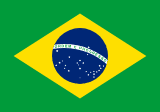
The Brazilian Real (BRL, symbol R$) is the official currency of Brazil, replacing several hyperinflation-era currencies (most recently the Cruzeiro Real in 1994) as part of the successful Plano Real stabilization plan. Issued by the Central Bank of Brazil (Banco Central do Brasil), banknotes come in R$2, R$5, R$10, R$20, R$50, R$100, and R$200 denominations; coins in 5, 10, 25, 50 centavos and R$1. Brazil is Latin America's largest economy and BRL is the region's second-most-traded currency after MXN.
Cash, cards, and ATMs in Brazil
Brazil is heavily card-friendly in cities — Visa, Mastercard, and Elo (the local debit network) are accepted at virtually all retailers including small markets, street food, and tour operators. PIX (the instant payment system launched by the central bank in 2020) dominates peer-to-peer payments and is increasingly accepted at businesses, but requires a Brazilian bank account so tourists typically can't use it directly. ATMs at Itaú, Bradesco, Banco do Brasil, and Santander branches accept foreign cards; expect R$8–15 per-transaction fees plus your home bank's charges. Avoid standalone ATMs in tourist areas (Copacabana, Ipanema, Pelourinho) — fees can hit R$25 plus poor rates.
Tipping culture in Brazil
Tipping in Brazil is modest. Restaurants: a 10% "serviço" is typically added to the bill automatically (legally optional but customary to pay). No additional tip needed beyond that. Taxis: round up to the nearest R$5. Uber: no tipping expected. Hotels: R$5–10 per bag for porters; R$5–10 per night for housekeeping at upscale properties. Tour guides: R$30–50 per person per half-day; R$50–100 per person per full-day for private tours. Spa/salon: 10%.
Best way to get Brazilian Real (BRL)
For USD-to-BRL, multi-currency cards (Wise, Revolut) deliver rates within 0.5–1% of mid-market. Avoid airport currency exchange (GRU/GIG/CGH) — spreads of 6–10% above mid-market are common. Casa de câmbio in central business districts offer competitive in-person rates; the Confidence Câmbio chain has multiple locations in São Paulo and Rio. For larger transfers ($10,000+), Wise, OFX, and Remessa Online compete closely; traditional bank wires typically charge 2–4% in disguised margins. Brazilian residents face capital-control restrictions and IOF taxes of 0.38–6.38% on outbound transfers depending on purpose.
Practical money tips for Brazil
- •Get an Uber on arrival in São Paulo or Rio — much cheaper and safer than airport taxis
- •Brazil plug type N (unique to Brazil — different from Type C); voltage varies by city (110V in São Paulo, 220V in Brasília) — pack universal adapter and check voltage before plugging in expensive electronics
- •PIX is dominant for local payments but tourists typically can't use it without a Brazilian bank account
- •Sales taxes (ICMS, PIS, COFINS) are included in displayed prices — no surprise tax at checkout
- •No tax-free shopping refund scheme for foreign tourists (unlike Argentina, Chile, Uruguay)
- •Carry small bills — many street vendors and small shops can't change R$100 notes
- •Beach kiosks (quiosques) on Rio/Salvador beaches usually accept cards but card readers can be flaky — keep R$50–100 cash backup
Common money scams to avoid in Brazil
Common tourist money scams in Brazil include: card skimming and card cloning at bars and restaurants in Rio/São Paulo tourist areas (never let your card leave your sight — request the terminal at the table); express kidnapping in Rio/São Paulo where victims are forced to withdraw money from multiple ATMs (use only daytime ATMs in safe areas, never at night); fake police checkpoint scams demanding bribes for "violations" (real police never solicit cash); rigged taxi meters from GRU airport (use Uber); and counterfeit R$50 and R$100 notes in change — check the watermark, security thread, and intaglio printing.
Frequently asked questions
Can I use US dollars in Brazil?
No — BRL is the only accepted currency. Some Rio and São Paulo luxury hotels accept USD at the front desk but at unfavorable rates. Convert at a casa de câmbio (e.g., Confidence) for in-person rates, or use a Wise card.
How much cash should I bring to Brazil?
Plan on R$100–250 ($20–50) per day in cash for taxis, small shops, beach kiosks, and tips. With cards accepted nearly everywhere, your cash use is supplementary. Withdraw from a major bank ATM in daylight hours — never night-time withdrawals in São Paulo or Rio.
Is Brazil safe for tourists with money?
Generally yes if you exercise basic urban precautions — avoid displaying valuable jewelry/watches, withdraw cash during daylight hours from bank-branch ATMs, use Uber instead of street taxis, and don't walk on isolated streets at night. Express kidnapping and ATM-area robbery are real risks in São Paulo and Rio — concentrated in specific neighborhoods.
What's PIX and why can't I use it?
PIX is Brazil's instant payment system launched in 2020 — it now handles more than half of all Brazilian payments. It's tied to Brazilian bank accounts (you need a CPF, the Brazilian tax ID, to open one), so foreign tourists typically can't access it. Some businesses now offer "PIX QR for tourists" via a Brazilian intermediary, but it's not standardized.
Why is the Brazilian Real so volatile?
BRL is one of the world's most volatile emerging-market currencies, driven by: Brazil's commodity-export dependence (soy, iron ore, coffee), high real interest rates that attract and lose carry-trade capital, fiscal policy uncertainty, and US Dollar strength cycles. USD/BRL has traded between 1.5 and 6.0 over the last 15 years — wider than almost any other major emerging-market pair.
Convert to and from BRL
More about BRL and Brazil
Key terms, rate history, and articles for travelers and senders.
Glossary
- Foreign Transaction FeeA foreign transaction fee is a surcharge — typically 1–3% of the purchase amount — that cr…
- Reserve CurrencyA reserve currency is held in significant quantities by central banks and other major fina…
- EurodollarA eurodollar is a US dollar deposit held in a bank outside the United States — typically i…
Rate history
- USD/BRL historyUSD/BRL is one of the most volatile major emerging-market pairs, swinging between 3.0 and 6.0 over the past decade
- GBP/USD historyGBP/USD ("Cable" in forex slang, named for the 19th-century transatlantic telegraph cable) has been one of the most politically-driven major pairs of the last decade
Articles
- USD vs EUR: Exchange Rate History and AnalysisUSD/EUR exchange rate history from 1999 to 2026. Key events, economic forces, and trends shaping the world's most traded pair.
- The Dollar Just Hit a 4-Month Low — What a Weaker USD Means for YouThe DXY fell to a 4-month low in May 2026 as Powell exited the Fed and Kevin Warsh prepares to take over with a dovish tone. Here is what a weaker US dollar actually means for travel, savings, gold, and investments — and what to do now.
- Best Time to Exchange Currency: When to Get the Best RateLearn when currency exchange rates are most favorable. Tips for timing your currency exchanges for travel, business, and investments.
Other country currency guides


Exchange rates refresh hourly from Frankfurter (European Central Bank reference data). Travel money information was compiled in 2026 and reflects current cash/card culture, tipping norms, and common scam patterns.